See the FAQ tab to compare the differences between our wired and wireless alarms.
ABOUT THIS PRODUCT
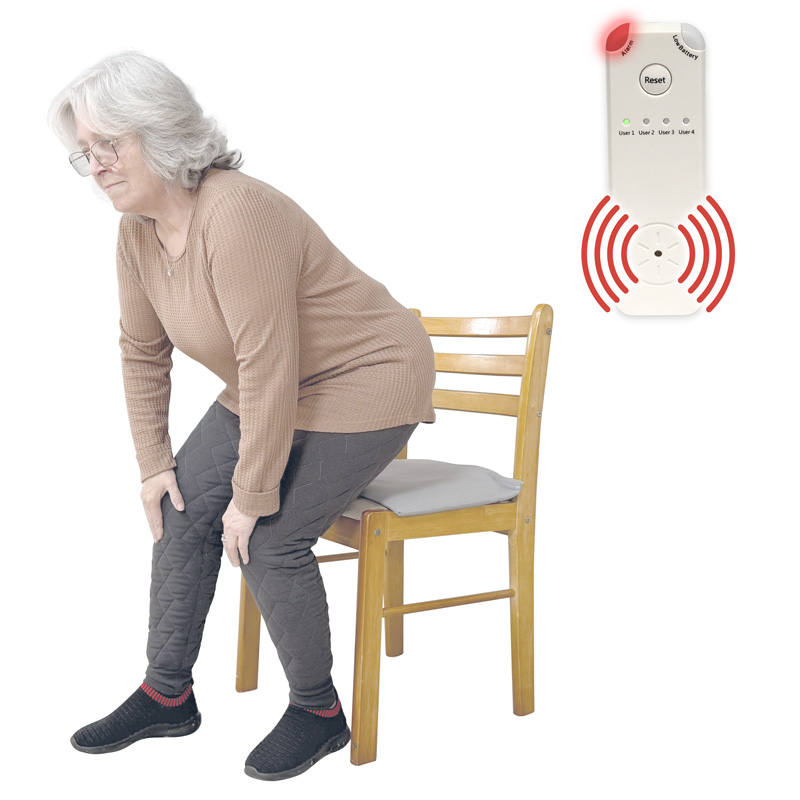
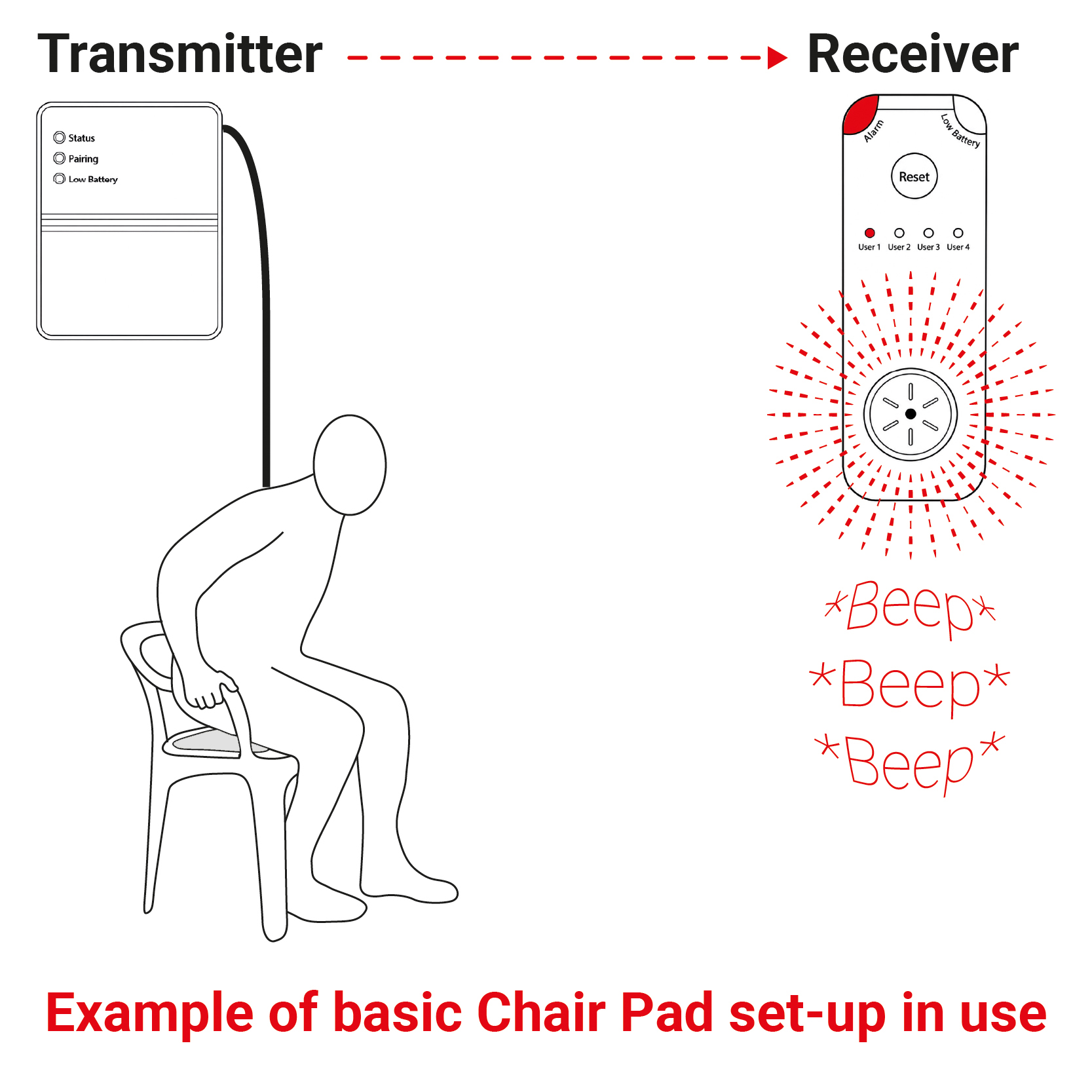
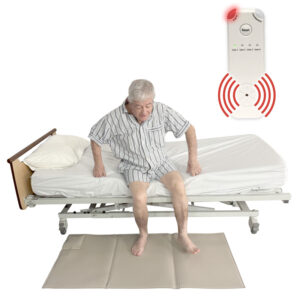
The Wireless Chair Alarm alerts carers when someone stands up from a chair or wheelchair. The noise may also help a patient remember not to stand up. The alarm noise will continue until the person sits down again or the carer presses the reset button.
The battery life is approx. 8 months. Operating distance is approx. 50m / 165′. The Alarm can work independently or integrate with a facility’s Nurse Call Paging System.
What’s Included:
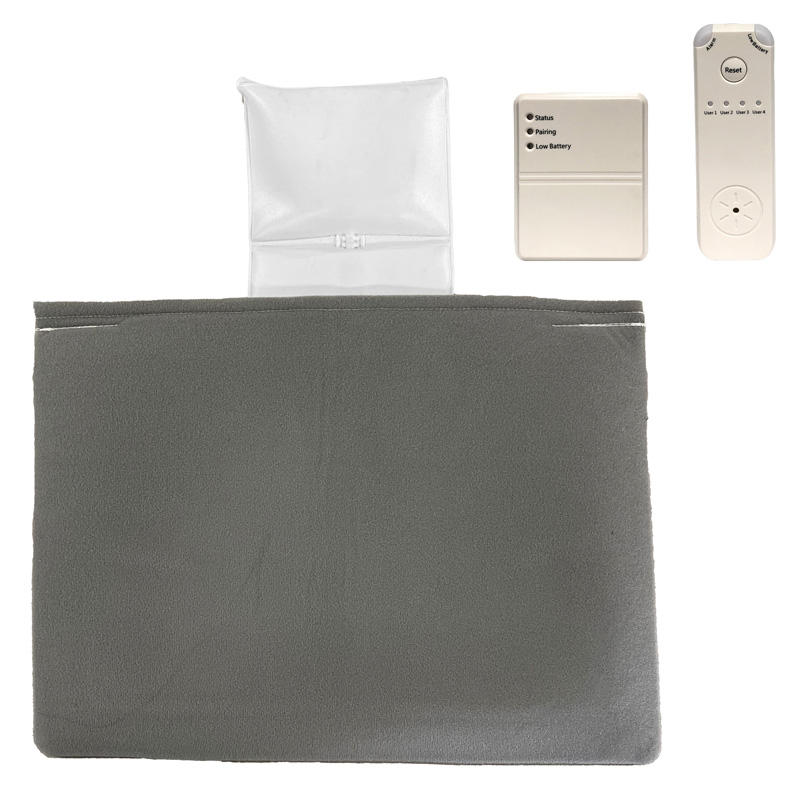
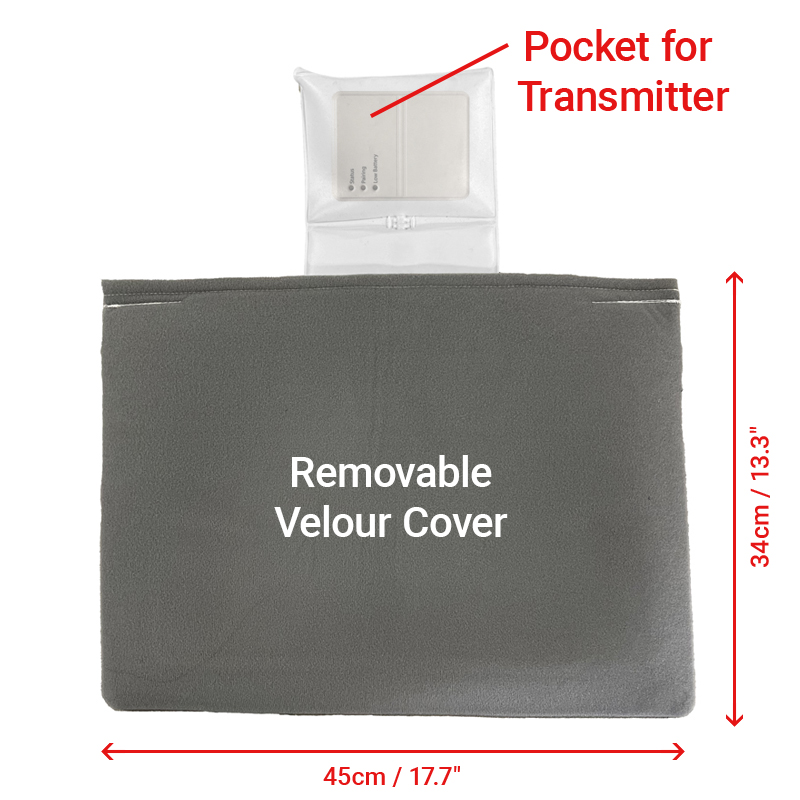
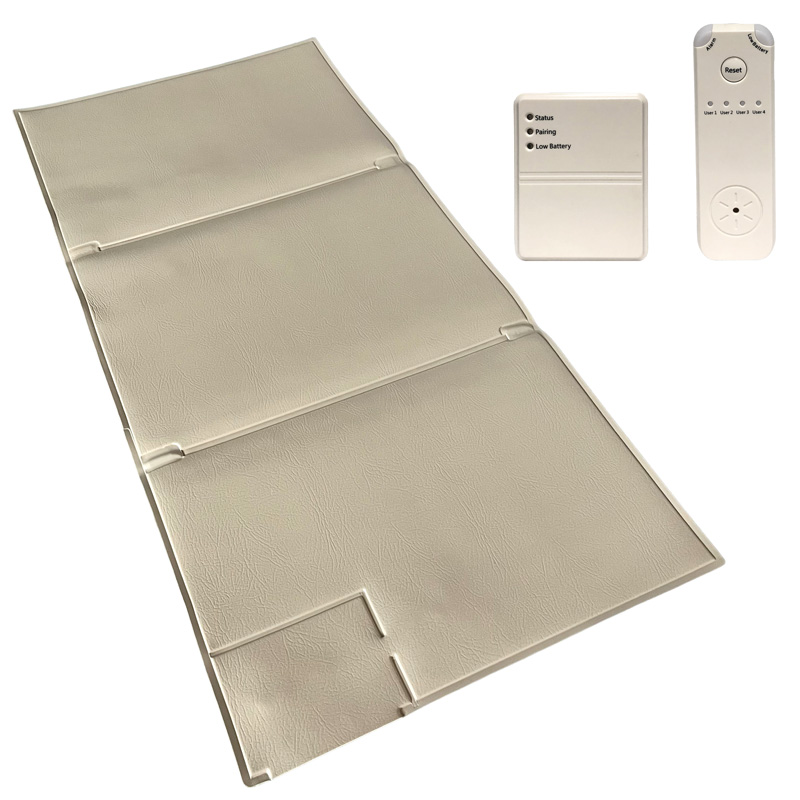
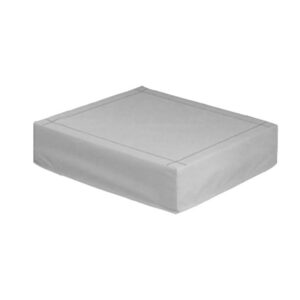
- Wireless Chair Alarm – Pad Only (includes a removable, washable soft velour cover.)
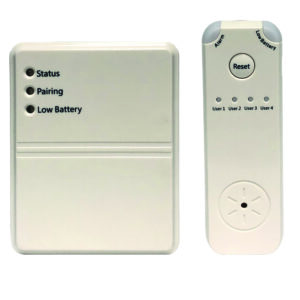
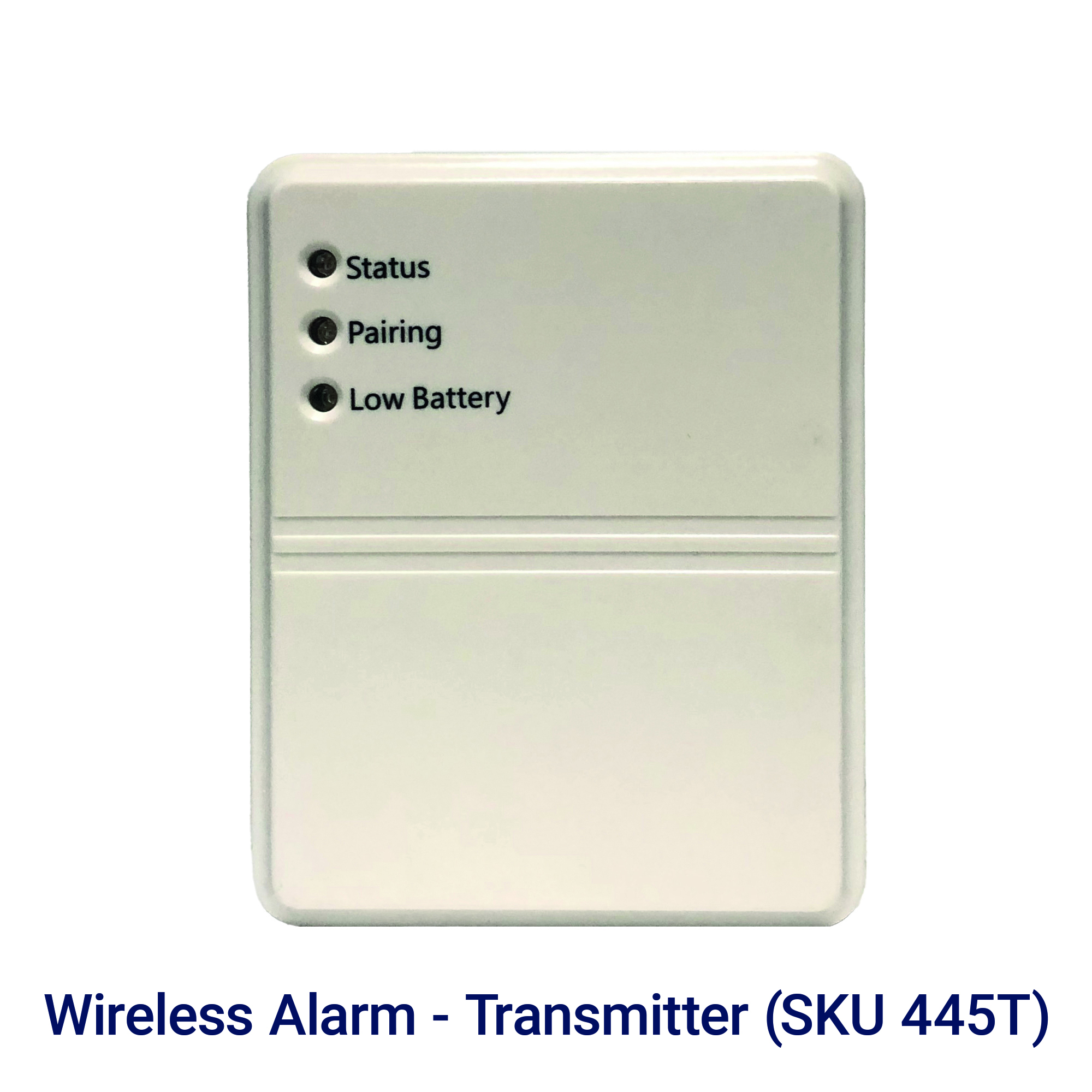
- Wireless Alarm – Transmitter (includes batteries, clip, and mounting bracket.)
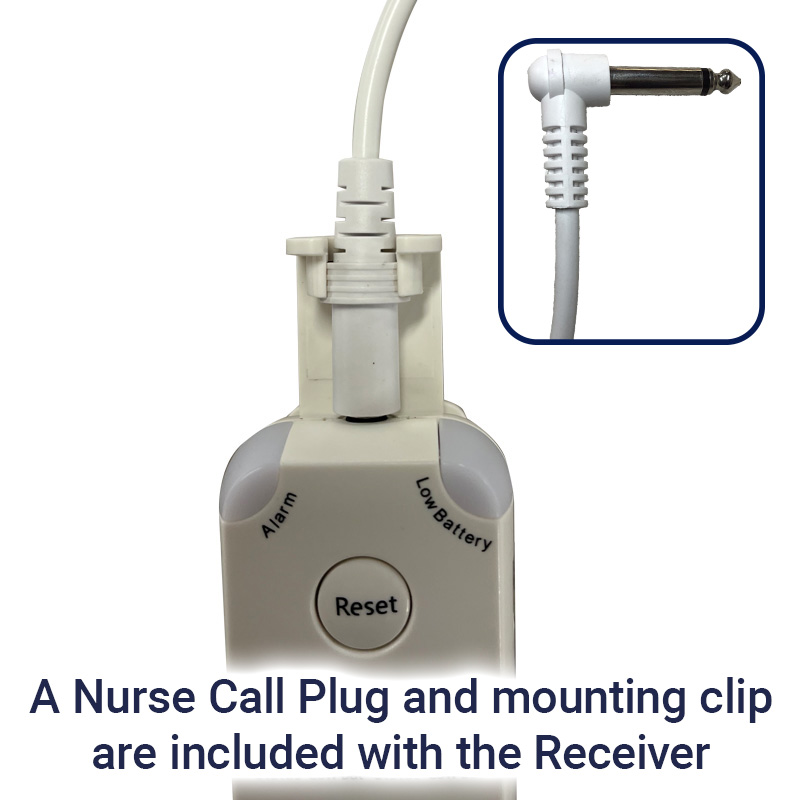
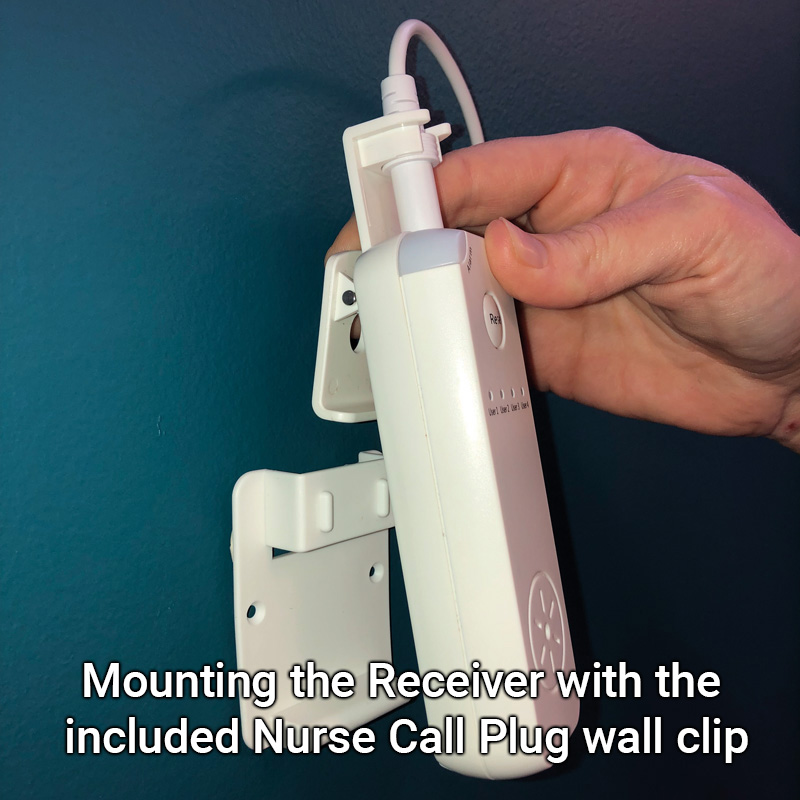
- Wireless Alarm – Receiver (includes batteries, belt clip, Nurse Call Plug with cable-brace clip, and wall mount.)
An optional Power Adaptor for the Receiver, replacement Pads, and additional Transmitters and Receivers are available here.
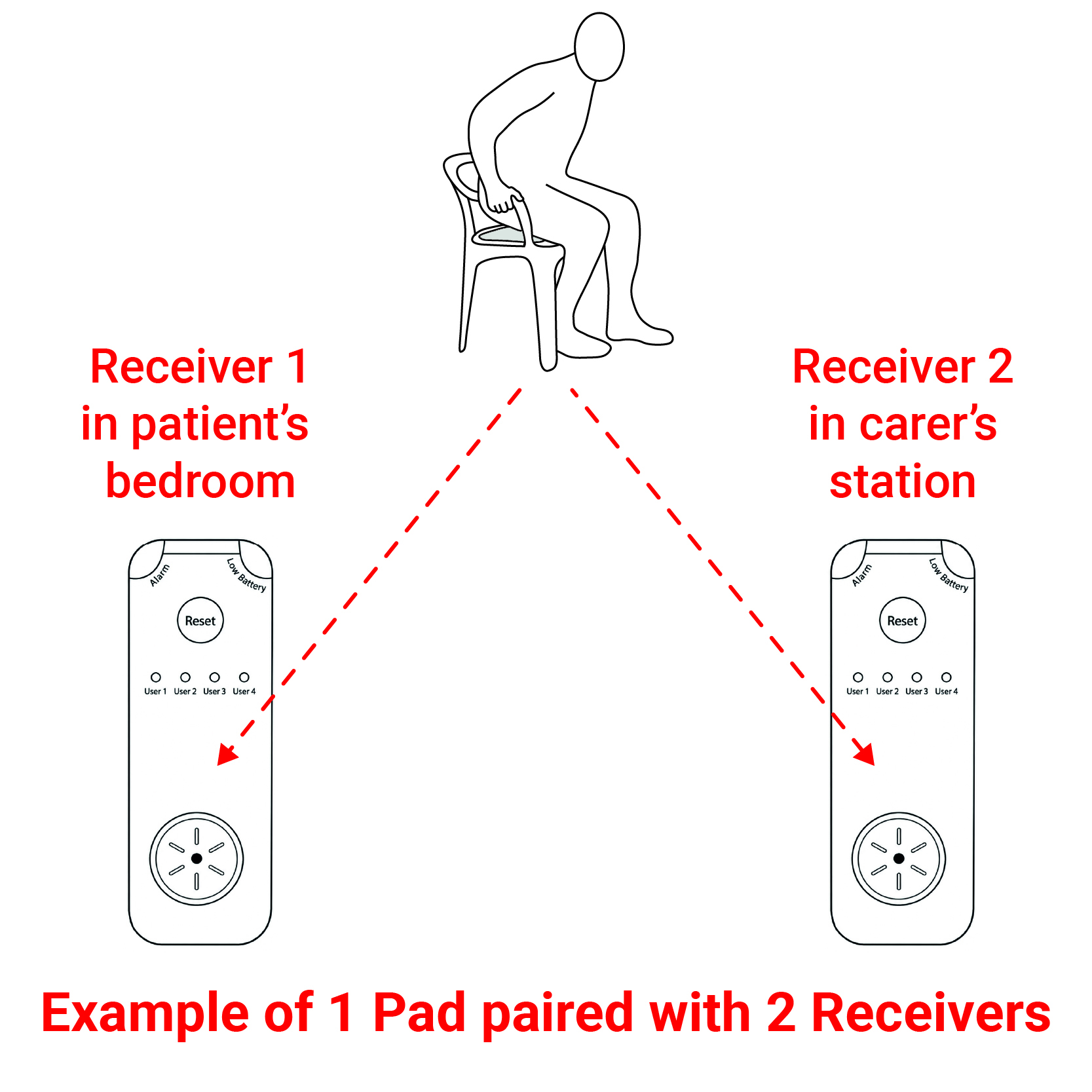
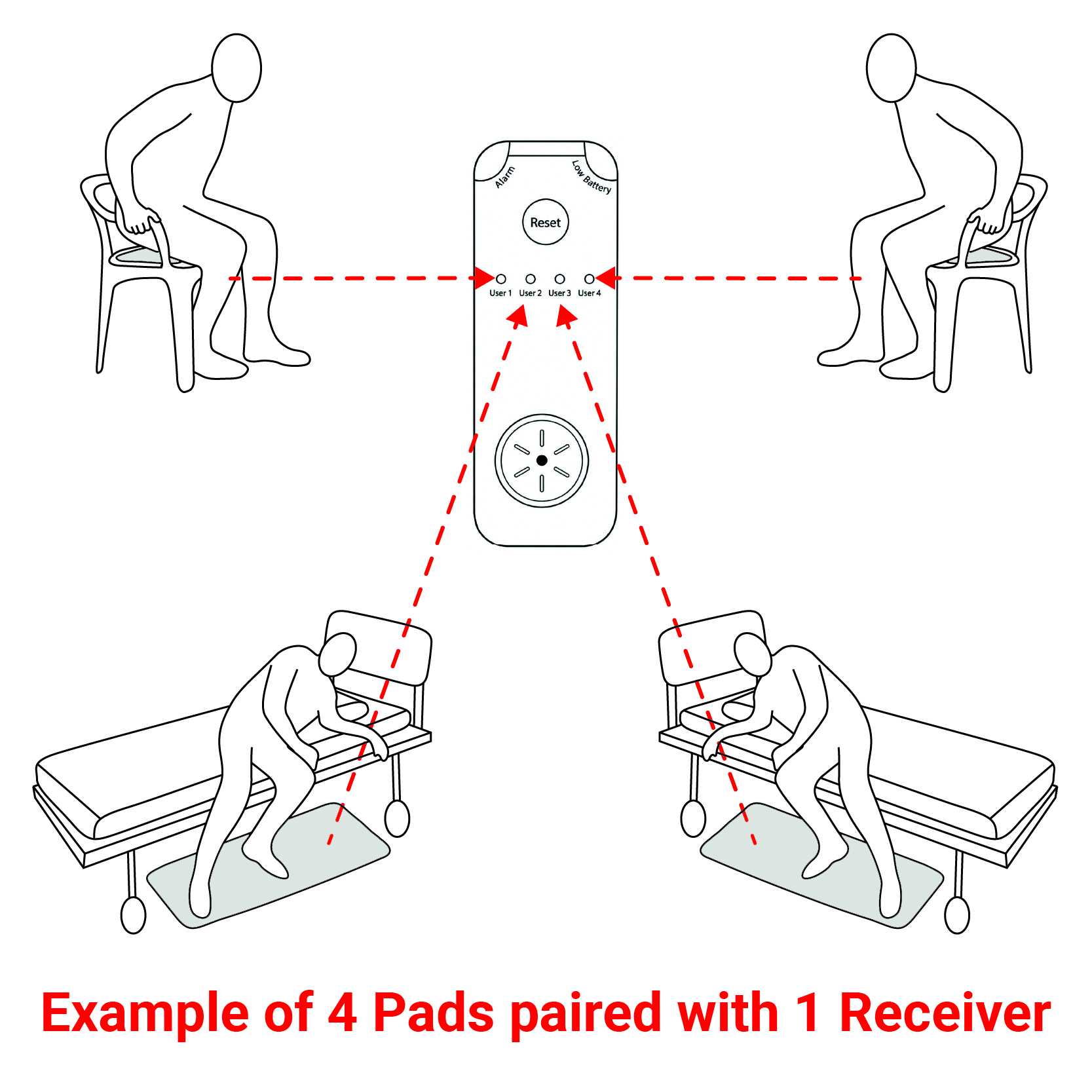
It is possible to monitor up to four Alarm Pads at once with a single Receiver. Two or more Receivers can also be used with one Alarm Pad, allowing one Receiver to be placed in the patient’s room and another in the carer’s room. See the example diagrams above in the image gallery.
WHO SHOULD USE THIS PRODUCT?
- Caregivers in hospitals, aged care, or home care who need to monitor patients.
- People at risk of falls, particularly those who may try to get up unassisted.
- Facilities using Nurse Call Paging Systems, as the Alarm should integrate with existing alerts.
HOW TO USE THIS PRODUCT
We pair and test basic single Pad/Transmitter/Reciever set-ups before sending them. The purchaser just needs plug the Pad into the Transmitter and add the optional mounting clips as they might need. Settings will need to be adjusted if using more than one Transmitter, Receiver, or Alarm Pad.
Use the switch inside the Receiver to select audible or silent alerts. This enables people to choose between notifications via the Receiver, through a Nurse Call Paging System, or through both.
The Receiver can be carried in a bag or pocket, clipped to pants or belt, or clipped on the included wall mount.
PRODUCT MATERIALS
Wipeable material, plastic, various electrical components.
TECHNICAL SPECS.
Usable Weight Range: 45–140kg / 99–309 lb (Assess with patient)
Operating Frequency: 433.92MHz
Operating (open linear) Distance: Approx. 50 metres / 165 feet
Battery Life: Approx. 8 months
STOCK KEEPING UNIT (SKU), SIZE, WEIGHT, GLOBAL TRADE ITEM NUMBER (GTIN)
| SKU |
DETAILS |
SIZE |
WEIGHT |
GTIN |
| 445C |
Wireless Chair Alarm – Pad Only |
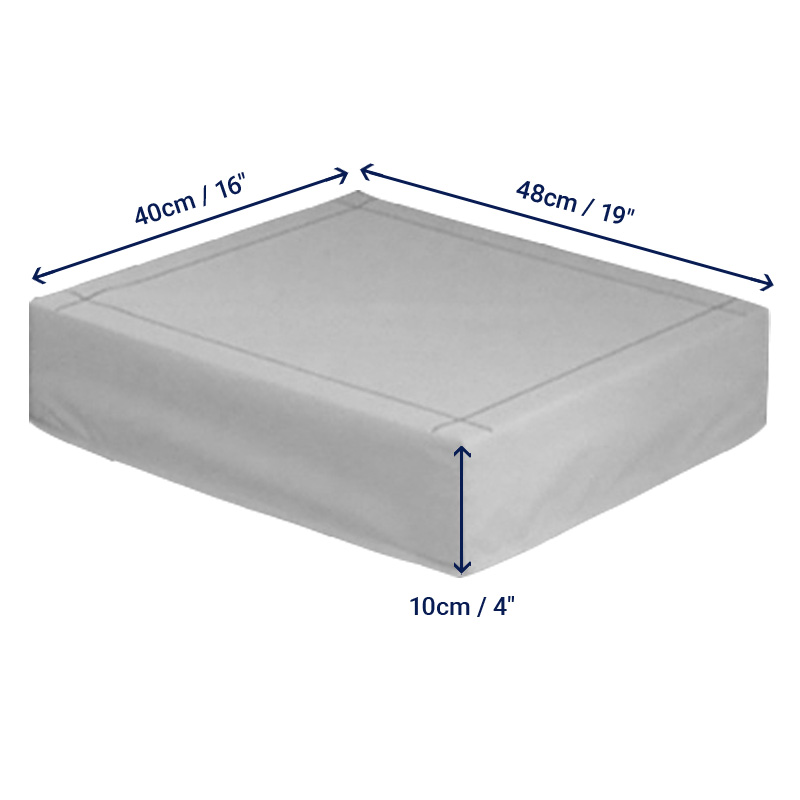
38cm x 26cm / 15″ × 10″ |
0.35kg / 0.77lb |
9349145011306 |
| 445R |
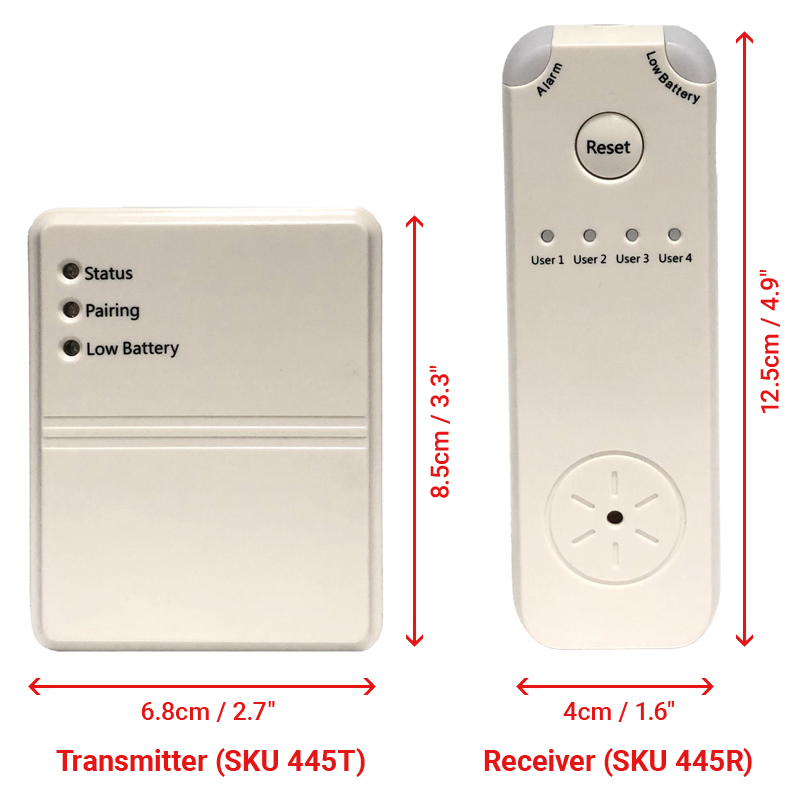
Wireless Alarm – Receiver |
12.5cm x 4cm x 2.5cm / 4.9″ x 1.6″ x 1.0″ |
0.012kg / 0.03lb (Including batteries) |
9349145011320 |
| 445T |
Wireless Alarm – Transmitter |
8.5cm x 6.8cm x 2cm / 3.3″ x 2.7″ x 0.8″ |
0.085kg / 0.19lb (Including batteries) |
9349145011337 |
GLOBAL MEDICAL DEVICE NUMBER (GMDN)
12585
CLEANING METHOD
Wipe clean. Do not submerge in liquid.
MAXIMUM WASHING TEMPERATURE
N/A
DETERGENT
Use a mild hospital grade disinfectant.
DRYING METHOD
Air dry in the shade.
CLEANING WARNING
Only use and store the product when it is dry. Test your cleaning chemicals on a discreet area to make sure it will not damage the material.
Battery life depends on usage and alarm frequency. Under typical conditions, the included batteries should last several months.
Battery Compartment Security: The Transmitter and Receiver are supplied with Phillips head battery compartment screws and a small screwdriver. We recommend people use these screws to secure the battery compartment after installing the batteries. This helps prevent the battery cover from being accidentally opened or batteries removed. If you prefer easier access for future battery replacement, the battery compartment may also be left unsecured.
Important: Metal objects can interfere with wireless signals and may reduce the operating range of the alarm system. Large metal items such as bed frames, medical equipment, cabinets, or reinforced walls can partially block or reflect the signal between the Transmitter and Receiver. To ensure reliable operation, place the Receiver where it has a clear path to the Transmitter whenever possible, and avoid positioning either device directly against large metal surfaces. If using multiple devices simultaneously, the distance between each Receiver must be at least 30cm. Always test the system after installation to confirm that the alarm signal is received correctly.
Warranty: 6 months. As the Chair Pad may be under a lot of stress and have a lot of movement on them when people are sitting down, the working life of the internal contact sheets may rapidly decline.
Warning: Choking Hazard. The Alarm Box and Nurse Call plug includes a small component as part of the design. This product may not be suitable for an individual who has a tendency to place inedible objects in their mouth.
Choosing Between Wired and Wireless Alarms
HOW DOES THE ALARM WORK?
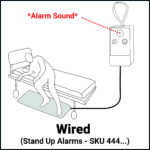
🔌 Wired: Each alarm pad plugs into an Alarm Box or Nurse Call System with a wired cable. The alarm noise can come directly from the Alarm Box, or alert through a facility’s Nurse Call System.
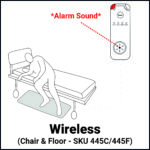
📶 Wireless: Each alarm pad plugs into a Transmitter. When the alarm is activated, the Transmitter sends a wireless signal to the Receiver which makes an alarm noise, or alerts a facility’s Nurse Call System.
IS INSTALLATION COMPLICATED?
🔌 Wired: Simple plug-and-play setup with no pairing required.
📶 Wireless: Requires initial pairing between the Transmitter and Receiver.
WHAT SET-UP OPTIONS ARE AVAILABLE?
🔌 Wired: Each pad generally needs its own sounding Alarm Box or Nurse Call Plug attachment. However, if using two alarm pads in close proximity (eg. a Stand Up Floor Alarm on either side of a bed), a Y-Connector can be used to run two pads into a single Alarm Box or Nurse Call Plug. One pad cannot be plugged into multiple Alarm Boxes.
📶 Wireless: Multiple pairing options are available. For example, up to four alarm pads can be paired to one Receiver, or one alarm pad can sound through multiple Receivers.
WHICH TYPE HAS THE LONGEST RANGE?
🔌 Wired: Limited by the length of the cable, although 10m/33ft Stand Up Alarm Extension Cords are available to increase the distance between the pad and the Alarm Box.
📶 Wireless: Allows greater freedom of placement, with the Receiver able to be located elsewhere in the home or facility without needing to use cables. Maximum range is approx. 50 metres / 165 feet.
WHICH TYPE HAS FEWER TRIP HAZARDS?
🔌 Wired: Cables may create a trip hazard if not routed carefully. Alarms come with a sign to alert carers and staff that an alarm is in place.
📶 Wireless: No cable between the Transmitter and Receiver means tripping hazards are reduced.
WHICH TYPE IS MORE RELIABLE?
🔌 Wired: Direct wired connection with no wireless signal involved generally experiences fewer false alarms caused by signal interference.
📶 Wireless: Uses a wireless connection, allowing flexible placement. Walls, metal objects, and other environmental factors may weaken the strength of the wireless signal.
WHAT ARE THE BATTERY REQUIREMENTS?
🔌 Wired: Powered by a 9V battery in the alarm box. Nurse Call Plug versions do not require batteries and plug into wall power outlet.
📶 Wireless: Requires two alkaline batteries in both the Transmitter (AAA) and Receiver (AA). An optional power adaptor is available for the Receiver only.
WHICH TYPE REQUIRES LESS MAINTENANCE?
🔌 Wired: Fewer electronic components to monitor. The alarm should be tested regularly to ensure it is working properly.
📶 Wireless: Batteries should be checked and replaced periodically. The alarm should also be tested regularly to ensure it is working properly.
CAN THE INTERNAL CONTACT SHEETS BE REPLACED?
🔌 Wired: Replacement contact sheets are available if the original contact sheet becomes damaged or stops working. All alarm pads work with internal contact sheets that wear down with use.
📶 Wireless: Wireless alarm pads cannot be opened to replace contact sheets. If internal contact sheets break or the short cable that connects the pad to the Transmitter is damaged, a new pad will need to be purchased.
WHICH TYPE IS BETTER FOR SHARED ROOMS?
🔌 Wired: Alarm sounds directly at the bed or chair location, unless it is plugged into a Nurse Call System or a Stand Up Alarm Extension Cord is being used.
📶 Wireless: Receiver can be placed with a caregiver, at a nursing station, or in another room. The Receiver can also be plugged into a Nurse Call System.
WHO SHOULD CHOOSE A WIRED OR WIRELESS ALARM?
🔌 Wired: Ideal for users who want a simple solution and are comfortable with a cable connection.
📶 Wireless: Ideal for users who want greater flexibility, reduced cable clutter, or remote notification capability.